
Wuyi rock tea.武夷岩茶
Place, leaf and the work of fire.
Wuyi rock tea belongs within oolong. Its regional identity and roasting craft help shape a cup whose aroma can be floral, woody, roasted or a mixture of these.
Camellia sinensis
- Part
- leaf and bud
- As eaten
- partially oxidised, finished, infused
- From
- Wuyishan, Fujian, China
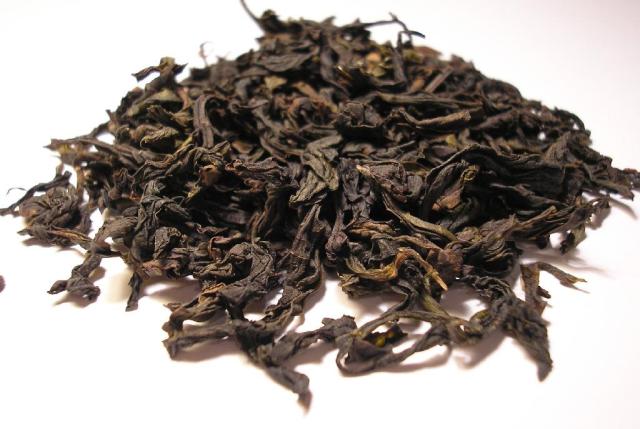
A tea with a particular home.
Wuyi rock tea has a defined regional identity and production tradition. It is not a separate species of tea plant. Within that identity, cultivars, makers and roasting choices create meaningful differences.
The language around rock tea includes sensory ideas associated with place. These descriptions can help people communicate an experience of the cup. They should not be read as a literal measurement of minerals entering the body.
Roasting brings another transformation.
Heat changes the leaf’s volatile compounds and the aromas they create. In Wuyi processing, stronger finishing fire has been associated with more pronounced roasted, floral and woody impressions in the material tested.
Some roasted notes involve pyrazines, but a tea’s aroma is a mixture. Detecting one compound does not explain the whole cup. The cultivar, earlier manufacture and later storage also remain in the picture.
A closer look.
A tea with a particular home.
Wuyi rock tea has a defined regional identity and production tradition. It is not a separate species of tea plant. Within that identity, cultivars, makers and roasting choices create meaningful differences.
[3]“Mineral” is a tasting word here.
A mineral-like impression can be part of how a tea tastes without establishing a large mineral dose. A Wuyi infusion is mostly water with dissolved tea compounds, including caffeine. Its roasted character does not remove that stimulation.
There is no nutritional reason to assume that more fire is always better. Roasting changes the food’s chemistry and sensory character; it is not a direct scale of health benefit.
The useful contribution is an enjoyable unsweetened drink with a particular craft behind it. Let the flavour be interesting in its own right, while judging caffeine and quantity according to your own response.
Notice what happens as the cup cools.
Begin with a named tea and its suggested brewing method. Smell the warmed leaf, then compare the fresh infusion with the same cup after it has cooled a little. Different aromatic notes may become easier to notice at different moments.
Keep the maker’s origin and roasting information with the tea. A strongly roasted taste alone cannot authenticate where it grew.
Our tea judgement: especially interesting when you enjoy the relationship between place and craft. Choose a tea for its particular character rather than seeking a nutritional advantage from the darkest roast.
Separate origin from description.
Read a Wuyi tea label or producer account. Put place names in one column and tasting words in another. An adult can show the dry leaf and cooled spent leaf.
A question to take further
Which words describe where the tea comes from, and which describe an experience of it?
Sources & further reading.
References follow the numbers in the text. Food traditions, nutrient measurements and experiments answer different questions.
- Green tea: usefulness and safety
NCCIH · Background; What Do We Know About Safety?
Checked 2026-10-28
- Changes of volatile compounds and odor profiles in Wuyi rock tea during processing
Original tea-chemistry and sensory research, Food Chemistry · Original publisher abstract through index; includes aroma recombination experiment
Checked 2026-10-29
- Wuyi Rock Essence Tea
China National Intellectual Property Administration · Single-page bilingual geographical-indication description
Checked 2026-10-28
Photograph
Da Hong Pao: a Wuyi oolong example. Iateasquirrel at English Wikipedia. Original image and attribution · CC BY-SA 3.0. Unmodified original photograph..
