
Oolong.烏龍茶
A leaf transformed through movement.
Oolong brings withering, handling, oxidation and heat into a careful sequence. Its range is wide: one tea may be floral and light, another deeper and strongly roasted.
Camellia sinensis
- Part
- leaf and bud
- As eaten
- partially oxidised, dried, infused
Skill lives between the stages.
Oolong tea-making depends on recognising changes in the leaf and acting at the right time. Withering, movement, resting, oxidation, heating and shaping work together. The craft cannot be reduced to one fixed oxidation percentage.
Different traditions and makers arrive at different expressions. Light floral character and a stronger roast can both belong within oolong. Knowing the tea’s origin and style makes its particular choices easier to appreciate.
Movement helps create aroma.
Handling and bruising change the leaf tissue, bringing compounds and enzymes into contact. During oolong manufacture, changes in catechins and volatile compounds accompany the work of shaking and resting the leaves.
The resulting aroma is a mixture, not the action of one magic molecule. Later heating and roasting can develop it further. This is why the warmed dry leaf, the first infusion and later infusions may each offer something different.
A closer look.
Skill lives between the stages.
Oolong tea-making depends on recognising changes in the leaf and acting at the right time. Withering, movement, resting, oxidation, heating and shaping work together. The craft cannot be reduced to one fixed oxidation percentage.
[1]Aromatic complexity is not a nutrient ranking.
A plain oolong infusion provides water and soluble tea compounds, including caffeine. Most of the leaf’s solid structure remains in the pot. A powerful aroma does not mean a proportionately larger dose of nourishment.
Nor does partial oxidation make oolong automatically better for the body than green or red tea. The amount brewed, the particular leaf and your response to caffeine matter. Its most dependable everyday strengths are being an enjoyable unsweetened drink and offering a rich sensory experience.
Claims that an oolong dissolves fat or compensates for a heavy meal go beyond what its processing chemistry establishes.
Follow the changing infusions.
Use the maker’s starting method for the tea and vessel you have. Pour out each infusion fully and notice the next one as a new cup rather than a weaker copy. Aroma, texture and finish can change at different rates.
If you enjoy comparison, place two named oolongs side by side and keep the method simple. Their differences need no elaborate tasting vocabulary.
Our tea judgement: especially rewarding when you want to explore craft through repeated infusions. Drink an amount and at a time that suit your caffeine tolerance, rather than treating the whole session as a health requirement.
Watch a rolled leaf open.
An adult can brew a labelled rolled oolong. Compare the dry form with cooled, opened leaves on a plate. Draw the amount of leaf folded into one dry piece.
A question to take further
How might shape affect the way water reaches the leaf?
Sources & further reading.
References follow the numbers in the text. Food traditions, nutrient measurements and experiments answer different questions.
- Taiwanese Oolong Quick Reference Guide
Global Tea Hut · August 2020, printed pages 3 and 9–10: processing and its variations
Checked 2026-10-28
- Effect of shaking process on correlations between catechins and volatiles in oolong tea
Original tea-processing research · Original publisher abstract through index; compound correlations during shaking
Checked 2026-10-29
- Green tea: usefulness and safety
NCCIH · Background; What Do We Know About Safety?
Checked 2026-10-28
- Wuyi Rock Essence Tea
China National Intellectual Property Administration · Single-page bilingual geographical-indication description
Checked 2026-10-28
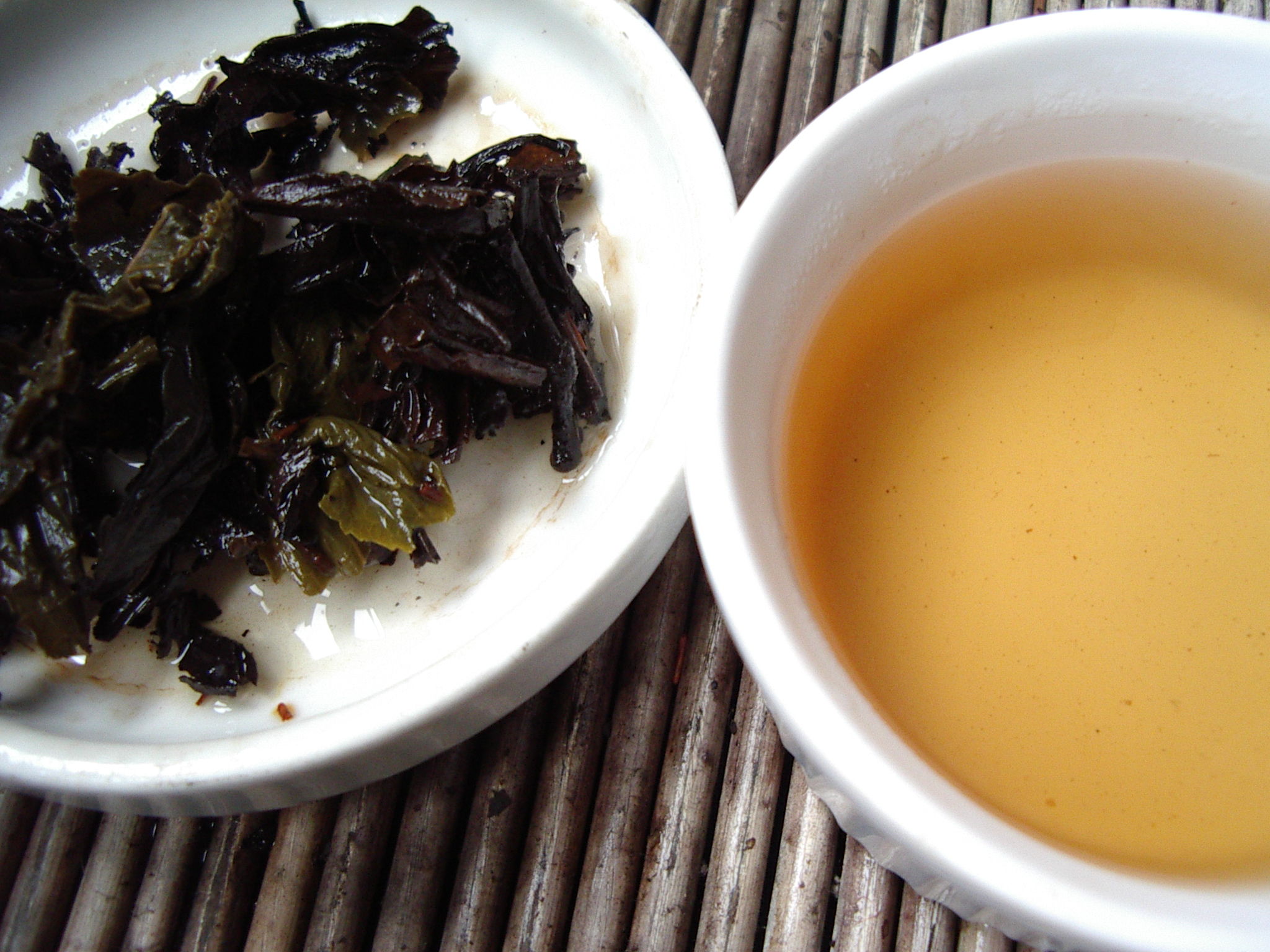
Photograph
Tieguanyin: the infused leaf and the cup. No machine-readable author provided. Laubrau~commonswiki assumed (based on copyright claims).. Original image and attribution · CC BY-SA 3.0. Unmodified original photograph.. Shown here fitted to a 4:3 frame.
