
Green tea.綠茶
A family of leaves, shaped by heat.
Green tea includes steamed, pan-heated and differently shaped leaves. Early heating limits oxidation, but the craft that follows creates a wide range of cups.
Camellia sinensis
- Part
- leaf and bud
- As eaten
- processed leaf, infused
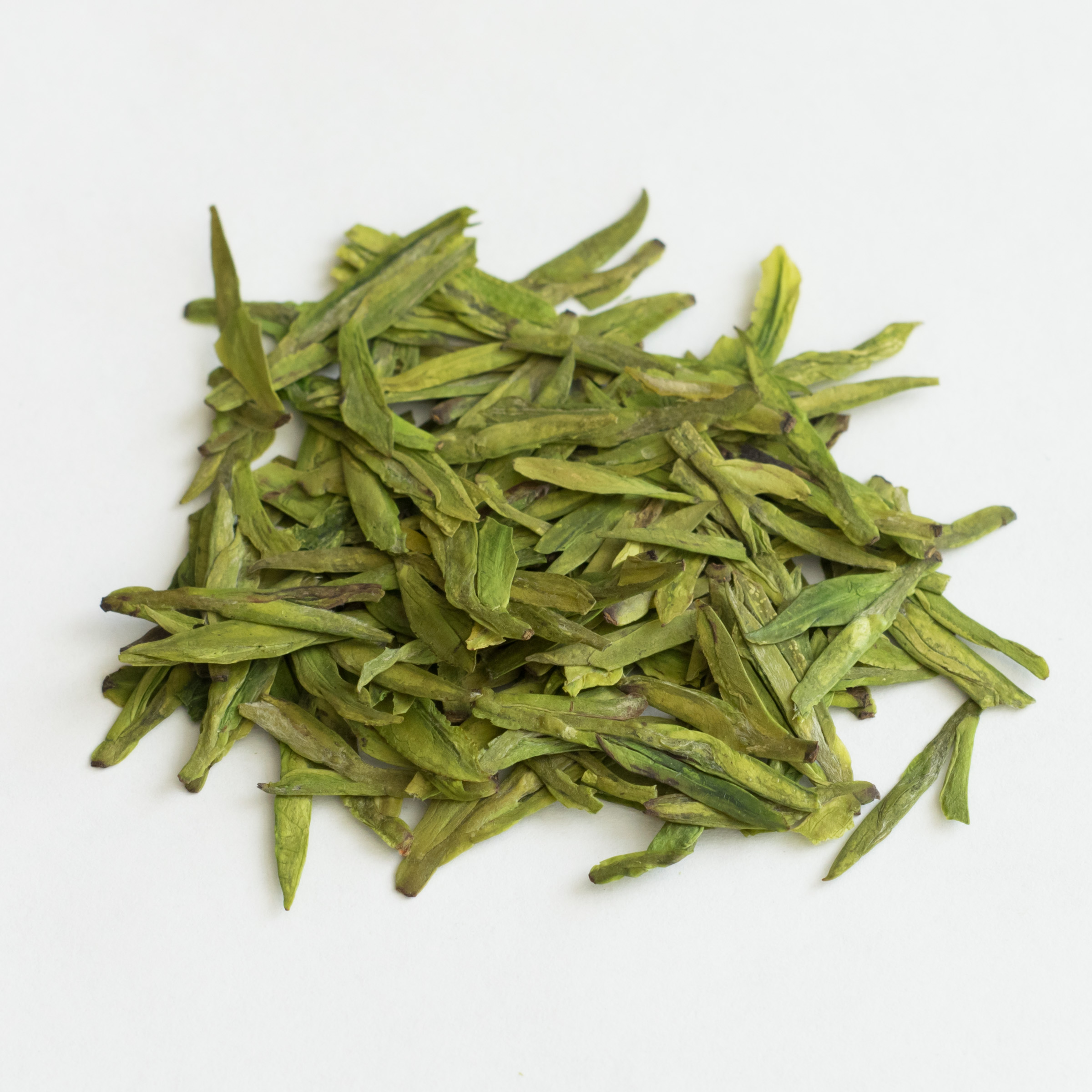
Many green teas, many ways of making them.
Green tea is a processing family within Camellia sinensis. Chinese pan-heating traditions and Japanese steaming traditions make different use of heat and leaf handling. Sencha is one particular style within that wider world.
A flattened leaf, a rolled needle and a curled leaf can all belong here. Their shapes reflect work done by people, not simply differences in how fresh the plant looks. Origin and manufacture tell you more than a generic green label.
Heat keeps oxidation in check.
Fresh tea leaves contain enzymes involved in oxidation. Early heating substantially limits their activity. Shaping and drying then help determine the finished leaf’s texture, aroma and behaviour in water.
Brewing is another transformation. Water extracts different amounts of caffeine, catechins and other soluble compounds according to temperature, time and leaf quantity. Hotter and longer do not keep increasing every compound indefinitely. Taste and chemistry change together, but they are not a single score.
A closer look.
A useful drink without a cure attached.
Unsweetened green tea contributes fluid and little food energy. It contains caffeine, which can support alertness but can also make sleep or rest more difficult when the amount or timing is wrong for you. The caffeine in a particular cup cannot be judged reliably from its colour.
[1] [4]A useful drink without a cure attached.
Unsweetened green tea contributes fluid and little food energy. It contains caffeine, which can support alertness but can also make sleep or rest more difficult when the amount or timing is wrong for you. The caffeine in a particular cup cannot be judged reliably from its colour.
Catechins contribute to green tea’s taste and show antioxidant activity in laboratory conditions. That is an interesting chemical property, not proof that a cup will prevent a particular illness. A brewed drink and a concentrated green-tea extract are different exposures.
There is no need to chase bitterness as a sign of benefit. A cup you enjoy and tolerate is a better everyday starting point than one made deliberately harsh.
Adjust the cup, one choice at a time.
Start with a named tea and its suggested method. If it tastes too bitter, try a shorter infusion, cooler water or less leaf, changing one variable at a time. If it feels thin, adjust in the other direction.
Drain the leaves between infusions when using a pot intended for repeated brewing. Give the drink time to cool to a comfortable temperature.
Our tea judgement: a worthwhile unsweetened drink when you enjoy it. Keep caffeine, sleep and personal tolerance in view, and let the particular leaf guide the method.
Change one brewing variable.
An adult can prepare the same labelled tea twice, changing only one variable and recording it. Younger learners can compare the cooled leaves and colour without drinking the caffeinated tea.
A question to take further
Which conclusions would become impossible if temperature, leaf weight and time all changed together?
Caffeine and concentrated extracts
Tea contains caffeine, which can affect sleep and comfort. Medicines, pregnancy and breastfeeding can change what is suitable. Concentrated extracts are different products from an ordinary cup. [4]
Sources & further reading.
References follow the numbers in the text. Food traditions, nutrient measurements and experiments answer different questions.
- Effects of different brewing conditions on catechin content and sensory acceptance in Turkish green tea infusions
TUBITAK Marmara Research Center, Food Institute · Original indexed abstract and results; nine trained panellists and chromatography
Checked 2026-10-29
- The proper way to brew Nihoncha
Japanese Ministry of Agriculture, Forestry and Fisheries · Tea types and brewing guide
Checked 2026-10-28
- Green tea: production
Tea Guardian · Production styles
Checked 2026-10-28
- Green tea: usefulness and safety
NCCIH · Background; What Do We Know About Safety?
Checked 2026-10-28
Photograph
Longjing: one pan-heated green-tea style. Difference engine. Original image and attribution · CC BY-SA 4.0. Unmodified original photograph..
