
Black rice.
A whole grain with colour in its bran.
A pot of black rice opens into deep purple. Its appeal begins with fragrance, chew and the way it belongs on a table. Inside that familiar food are three different stories: an energy-rich grain, a protective outer layer and pigments that change as we cook and digest them.
- Part
- grain
- As eaten
- whole, cooked
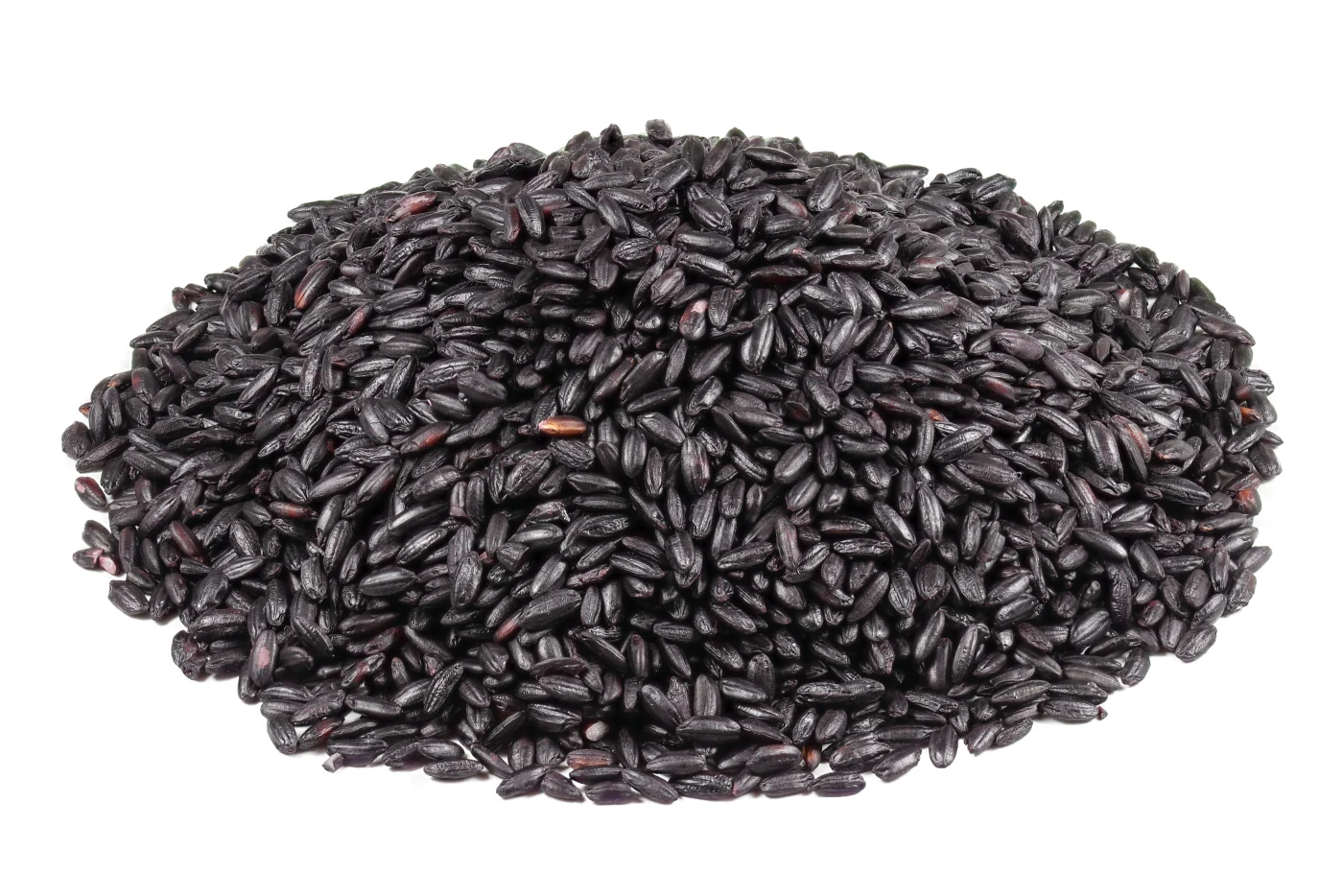
A grain for gathering.
In Manipur, north-east India, aromatic black rice is known as Chak-hao. It is eaten as rice and made into kheer, a milk-based sweet dish. Its fragrance and sticky texture help explain its place at communal meals and celebrations. The value begins with a grain people grow, recognise and enjoy, rather than with an isolated compound.
In Bengkulu, Indonesia, black glutinous rice also becomes tapai: cooked rice transformed by a fermentation starter into a sweet, softened food. This is a different use of the grain from a plain savoury rice bowl. Fermentation, added ingredients and the amount eaten all change what finally reaches the body.
Neither tradition requires us to call every dark rice the same thing. Black rice describes a colour group; glutinous describes a starch type; Chak-hao describes a particular regional heritage. They overlap, but one name does not guarantee the others.
Dark outside. Pale inside.
The inedible husk comes off before rice is cooked. Beneath it, the bran forms outer layers around the endosperm, the large starchy centre. The germ, or embryo, sits near one end. Black rice gets its dark colour mainly from anthocyanin pigments in those outer grain layers. Cut a grain and the contrast becomes easier to understand.
When these edible outer layers remain, the grain brings fibre and other bran-associated compounds to the meal. Polishing removes much of that outer material. A bag of whole black rice therefore offers something different from a drink made with black-rice extract or a finely milled rice flour. The physical structure matters as well as the ingredients listed.
Some black rice cooks into separate, chewy grains. Black glutinous rice becomes sticky because its starch is especially rich in amylopectin. “Glutinous” means glue-like here; rice itself does not contain wheat gluten.
A closer look.
The centre supplies energy.
The pale centre is mostly starch. Its amylose and amylopectin balance helps determine whether the cooked rice is firm or sticky.
[4]Water opens the grain.
Heat and water soften rice for eating. Pigments may move into the water, so the colour you see is changing alongside the texture.
[7]Its first job is to feed you.
Most of a rice grain’s food energy comes from starch. Cooking with water softens the grain and opens up starch granules. During digestion, enzymes break accessible starch into smaller sugars, eventually releasing glucose that the body can use for energy. Black rice is still a carbohydrate food. Its colour does not cancel this function.
The bran adds fibre and a more substantial texture. Much of that fibre reaches the large intestine rather than being absorbed as glucose in the small intestine. A bowl eaten with vegetables and beans, tofu, fish or eggs also supplies a wider mix of nutrients than rice alone.
The useful question is therefore bigger than “Is black rice healthy?” Ask how much rice is in the meal, whether its outer layers remain, how it has been cooked and what accompanies it. A sweet rice dessert and a vegetable-filled savoury bowl can both be enjoyable, but they are not nutritionally interchangeable.
What the colour can, and cannot, tell us.
Anthocyanins help make this rice interesting. They are plant pigments with antioxidant activity in laboratory tests. That means they can participate in chemical reactions under the test conditions. It does not mean that a darker spoonful delivers a measured amount of protection to every organ.
Heat changes these pigments, and digestion changes them again. In cooked black rice tested in a simulated digestive system, some anthocyanins broke down as conditions moved from the stomach stage to the intestinal stage, while other phenolic compounds became more accessible. What is present in the dry grain is not identical to what becomes available after eating.
This makes the whole grain worth exploring, while keeping the health story proportionate. Colour alone cannot tell us that a particular rice will prevent disease, lower a person’s blood sugar or be better than every brown rice. Its reliable everyday strengths are food, variety, texture and the additional outer grain layers when retained.
Cook for the grain you have.
Follow the water and cooking directions for the rice you have. A sticky black rice intended for a pudding may need a different method from a firmer rice intended for a savoury dish. Cook until the grain is properly tender and pleasant to eat.
The cooking water may become purple as pigments leave the grain. A loss of colour is not a complete measure of lost nourishment. Starch, fibre, minerals and flavour are different parts of the food, and they do not all respond to heat in the same way.
For an everyday bowl, try black rice beside greens and a substantial protein food. If you prefer a softer texture, cook it separately and combine it with another cooked grain. For a sweet preparation, enjoy the coconut milk, milk or sugar as part of that dish’s character; the dark rice does not make the additions disappear.
Include it because you enjoy the whole meal.
Black rice earns a place in a varied kitchen when you enjoy its flavour and texture. It can bring the edible bran back into a rice meal, introduce a different grain tradition and make a simple bowl feel more considered. It does not need a “superfood” promise to be worthwhile.
Choose a clearly labelled food-grade product, check whether it is sticky or non-sticky and use the maker’s cooking directions. If a firmer whole grain does not suit your digestion, a smaller amount or a softer preparation may be more comfortable. There is no obligation to replace every other rice.
Exact nutrient amounts depend on the variety, milling and cooked water content. A dry-rice label should not be read as a value for the same weight of cooked rice. Use the label for your own product when you need those numbers.
Look at a grain before and after cooking.
With an adult handling the hot pan, place a few dry and cooked grains on separate white plates. Notice size, texture and any colour in the cooking water. A photograph or drawing works just as well as tasting.
A question to take further
What changed when water entered the grain? Which changes can you observe directly, and which would need a different kind of test?
Sources & further reading.
References follow the numbers in the text. Food traditions, nutrient measurements and experiments answer different questions.
- Specialty rice
Department of Agriculture and IRRI collaboration · Specialty-rice types; Pigmented rice
Checked 2026-10-28
- Black aromatic rice: Chak-hao
Manipur Organic Mission Agency · Local name, aroma, stickiness and cooked rice/kheer use. Marketing health claims not adopted.
Checked 2026-10-29
- The Family Nutrition Guide: why we need to eat well
Food and Agriculture Organization · Topic 1; nutrient functions and mixed meals
Checked 2026-10-29
- A consumer’s guide to rice
International Rice Research Institute, Rice Today · Rice starch; grain shape; parboiled rice
Checked 2026-10-29
- Rice grain sample preparation and submission guide
IRRI Service Laboratories · Dehulling, milling and test preparation
Checked 2026-10-29
- Bioaccessibility of phenolic compounds during simulated gastrointestinal digestion of black rice (Oryza sativa L., cv. Artemide)
Colasanto and colleagues, Food Chemistry, 2025 · Original abstract: cooked Artemide rice, simulated digestion. Anthocyanin breakdown and free phenolic acids; not a human health trial.
Checked 2026-10-29
- Influence of Cooking on Anthocyanins in Black Rice
Hiemori, Koh and Mitchell, Journal of Agricultural and Food Chemistry · Abstract; Methods, pp. 1909–1910; Results
Checked 2026-10-29
- Karakteristik Tapai Ketan Hitam dengan Variasi Metode Pemasakan
Marniza, Syafnil and Sari Fitria, Universitas Bengkulu · pp. 112–115, abstract, introduction and sampling method
Checked 2026-10-29
Photograph
Dry black rice grains. Sanjay Acharya. Original image and attribution · CC BY-SA 4.0. Resized to 1400 pixels wide and encoded as WebP; no crop or retouching..
